As population migration away from California and the Northeast continues, many individuals are seeking more affordable areas in the southern United States to call home. Florida and North Carolina have emerged as two states benefiting from this relocation trend, but their construction sectors display significant differences.
Residential Construction:
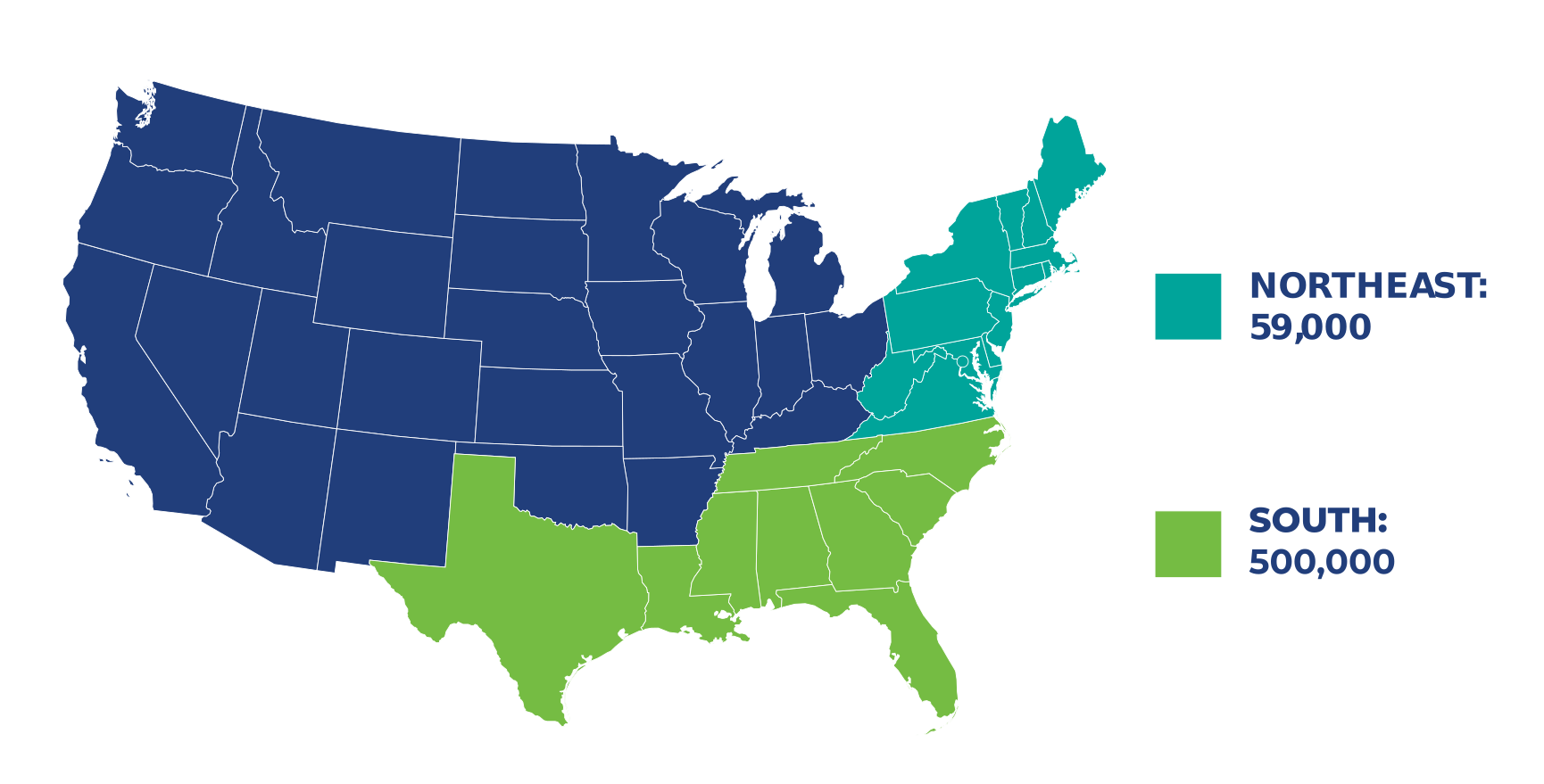
In the United States, there has been a general increase in residential building permits and housing starts in the past decade. In 2022, nearly 59,000 building permits were issued in the Northeastern region of the U.S., while over half a million permits were issued for single-family housing in the South[1].
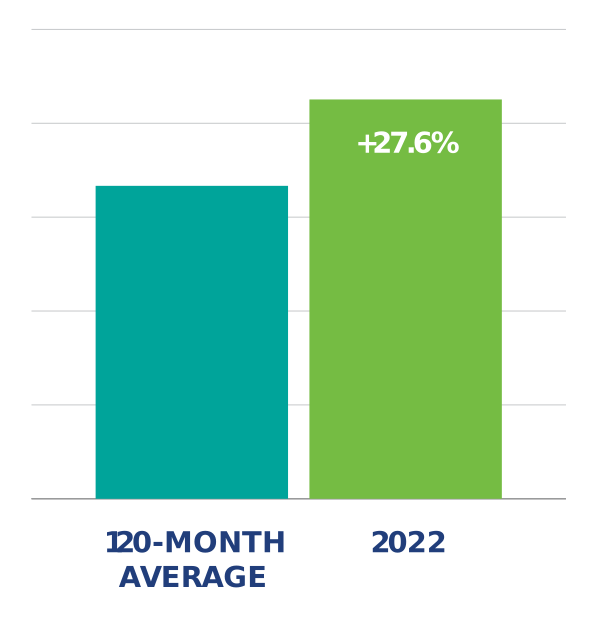
The number of new house starts in 2022 was 27.6% higher than their previous 120-month average, with 70.4% of new house starts being single-family housing. In 2021, there were 1.60 million total new privately-owned housing starts, up 16.0% from 2020, and 1.74 million total housing permits were issued, up 18.1% from 2020.
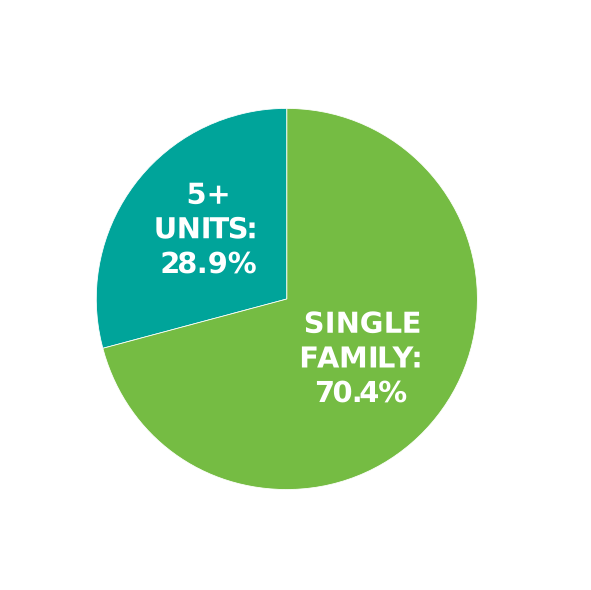
Of the housing starts in 2021, 28.9% were buildings of 5-or-more units, and 70.4% of new housing was single-family homes[2].
Industrial/Warehouse Construction:
Florida has seen significant industrial and warehouse construction activity. Industrial assets built throughout Florida between 2015 and 2022 led to record-setting development totals never before seen in the state’s history. For instance, Prologis delivered 36 buildings totaling 7.9 million square feet — the most in the state since 2015[3]. Florida construction activity remained strong at the close of 2022, with more than 23.1 million square feet of industrial assets underway throughout key markets[4]. Looking ahead to 2023, there are expectations for continued growth, particularly in markets such as Miami and Jacksonville, which are projected to deliver over 8 million and 14 million square feet of industrial space, respectively[5].
No specific data on North Carolina’s construction sector has been identified at the time of this publication. However, it’s worth noting while North Carolina may have a high proportion of industrial and warehouse projects within its construction sector, Florida’s industrial construction activity has been quite robust due to its pro-business policies, population growth, and preparations for an industrial boom over a decade ago. These factors, along with the rise of e-commerce, have pushed industrial construction into the spotlight in Florida[6].
Boom Time for FL and NC:
Despite the different focuses of their construction sectors, both Florida and North Carolina have demonstrated resilience and growth. Florida’s success can be attributed to its robust industrial construction activity and the high number of multifamily construction projects, which are likely driven by high demand for coastal housing and limited space near the coasts. Meanwhile, North Carolina’s success may be due to its strategic economic initiatives that have stimulated industrial and warehouse construction. However, specific data to support the observations about North Carolina was not found within the time limit.